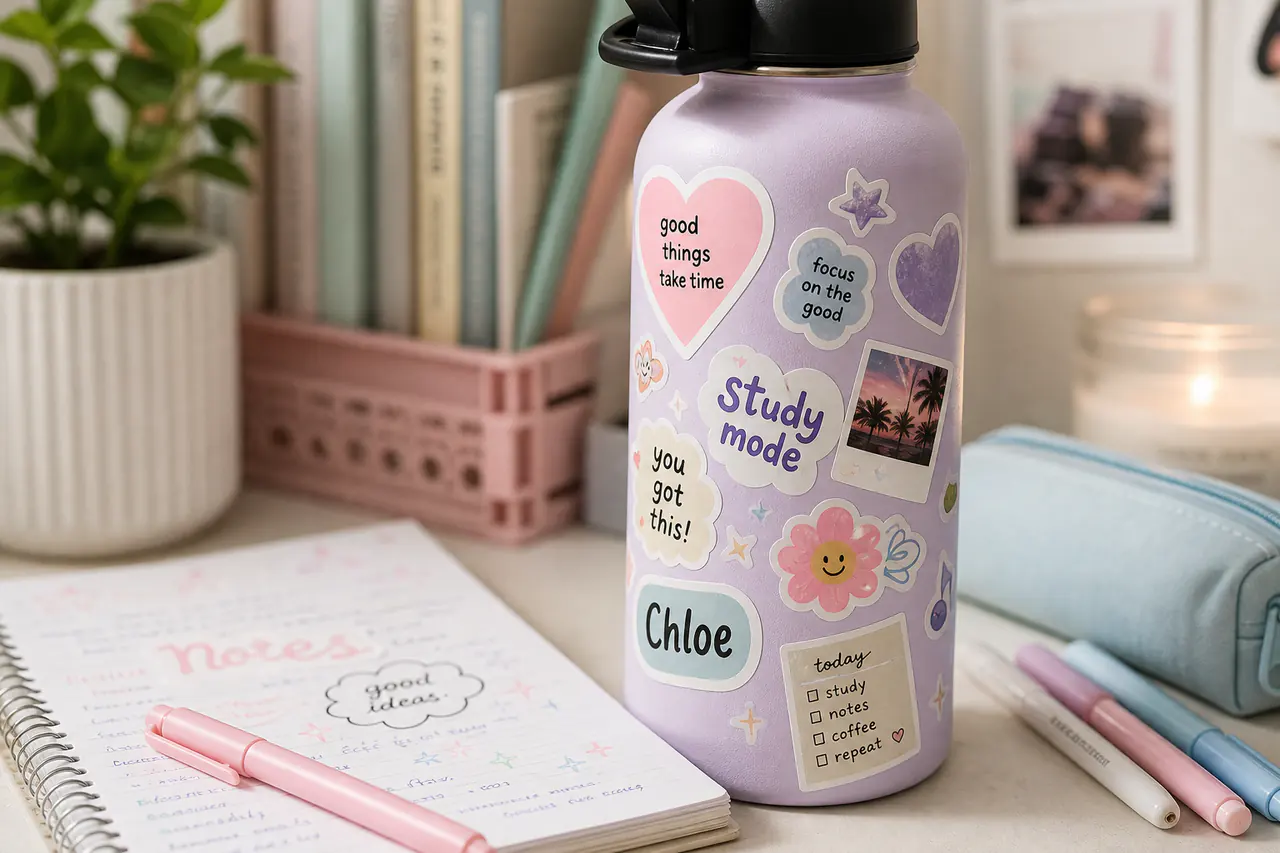
For waterproof stickers in the UK, choose a vinyl or synthetic sticker material with a protective laminate. Paper stickers are suitable for dry indoor packaging but are not a good choice for bottles, bathrooms, kitchens, bikes, or outdoor use. For real-world durability, ask for water-resistant print, a sealed surface, and rounded corners where possible.
Use vinyl or a synthetic film for bottle, bathroom, kitchen, and outdoor stickers.
Add gloss, satin, or matte laminate when the sticker will be handled, wiped, or splashed.
Waterproof claims should match the use case. A bottle sticker and a long-term outdoor warning label need different durability expectations.
What waterproof really means
In sticker buying, waterproof usually means the sticker can handle water exposure without the print running or the face material breaking down quickly. It does not mean every sticker will survive every outdoor, dishwasher, chemical, or abrasion condition forever.
A more accurate question is: what will the sticker touch, how often will it be handled, and will it be wiped, chilled, heated, or left outside?
Material comparison
The face material matters first, then the print process, adhesive, and laminate. If the material is paper, water can enter the fibres even if the top surface looks coated.
| Material | Water performance | Best use |
|---|---|---|
| Uncoated paper | Poor | Dry indoor notes and temporary labels |
| Coated paper | Light splash resistance | Packaging seals kept dry |
| Vinyl | Strong water resistance | Bottles, laptops, tubs, bathroom items |
| Vinyl with laminate | Best everyday durability | Handled stickers, outdoor splash, wipe-clean labels |
| Specialist outdoor film | Highest durability | Longer-term signage and harsh environments |
UK use cases that need water resistance
UK weather is damp, so even stickers that are not meant for outdoor life can meet condensation, rain, wet hands, kitchen steam, and parcel handling. For bottles, lunchboxes, bathroom containers, bike helmets, and window decals, choose vinyl with laminate.
For small-business packaging, match the material to the customer journey. A dry postal box seal can be paper. A candle warning label, jar label, or takeaway cup label needs more resistance.
Design tips for longer life
Rounded corners resist lifting better than sharp points. Larger stickers usually stay down better than tiny pieces with thin tails. A clean, dry, smooth surface is also essential because water resistance cannot rescue a sticker applied to dust, oil, or condensation.
If a sticker will be wiped often, keep important text away from the edge and choose a laminate that protects the ink surface.
FAQs
Are vinyl stickers dishwasher safe?
Some specialist vinyl stickers can survive dishwasher cycles, but it depends on material, laminate, adhesive, surface, and cycle heat. Hand washing is the safer recommendation unless the product is specifically tested for dishwashers.
Can waterproof stickers go outside?
Vinyl stickers with laminate can handle outdoor splash and short to medium exposure, but long-term outdoor use needs a material and adhesive specified for that environment.
Are paper stickers waterproof?
No. Paper stickers can be coated for light splash resistance, but paper is not the right choice for true waterproof use.