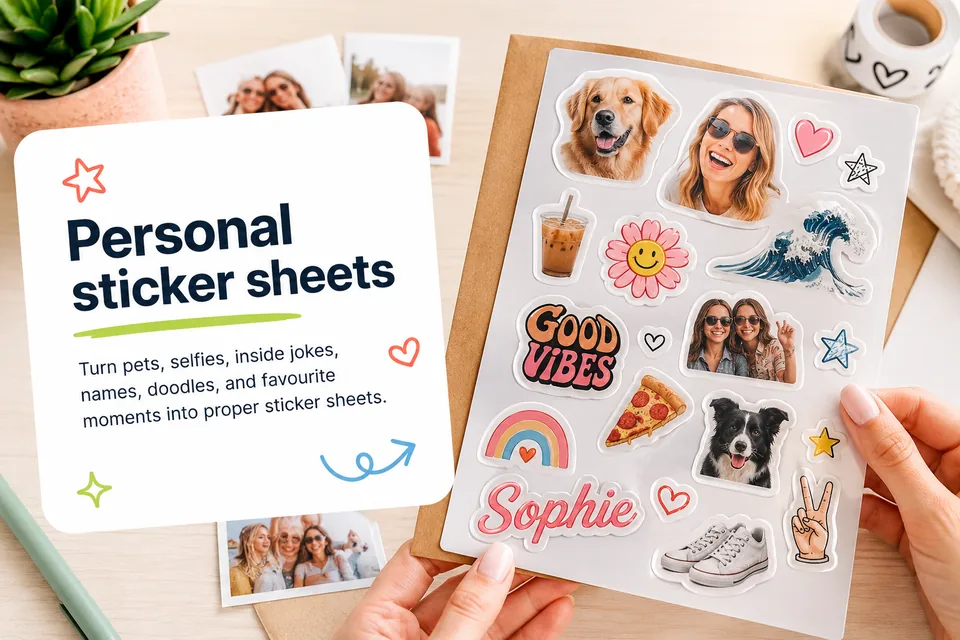
Die-cut stickers are cut through both the sticker material and backing paper, so each sticker is supplied as an individual shape. Kiss-cut stickers are cut through only the top sticker layer, leaving the backing sheet intact. For custom sticker sheets, kiss-cut is usually the better choice because several stickers can sit on one A5 sheet and peel away cleanly.
Choose kiss-cut when you want many stickers on one backing sheet, especially for planner, pet, student, and small-business packs.
Choose die-cut when each sticker needs to feel like a standalone product, freebie, event handout, or branded insert.
For mixed custom sticker sheets, Stickiva recommends kiss-cut with a 2 mm sticker border and at least 4 mm between neighbouring cutlines.
What is the difference?
The difference is the depth of the cut. A die-cut sticker is cut all the way through the printed material and backing, so the finished item follows the outer shape. A kiss-cut sticker is cut through the printed sticker layer only, so the backing sheet remains whole.
On a sticker sheet, that backing sheet is the useful part. It gives the sheet structure, protects tiny details, and lets customers peel one sticker at a time without handling a pile of loose shapes.
Die-cut vs kiss-cut comparison
Both formats can use the same artwork, vinyl, laminate, and print quality. The better choice depends on how the customer will use the stickers after they arrive.
| Feature | Die-cut | Kiss-cut |
|---|---|---|
| Cut depth | Through sticker and backing | Through sticker layer only |
| Best format | Individual stickers | Sticker sheets |
| Peeling | Can be fiddly on small shapes | Easy because the sheet acts as a handle |
| Packaging feel | Premium standalone item | Organised, giftable, and practical |
| Best uses | Brand freebies, event stickers, laptop decals | Planner sheets, pet packs, labels, creator drops |
Why kiss-cut usually wins for sticker sheets
Sticker sheets work best when they are easy to browse, easy to peel, and tidy to store. Kiss-cutting supports all three. A customer can keep the full sheet in a notebook, order box, drawer, or market-stall display and peel stickers as needed.
Kiss-cut sheets also protect small interior details. Thin tails, ears, icons, stars, and text labels are less likely to bend before use because the backing sheet supports them.
- Use kiss-cut for A5 mixed sheets with several designs.
- Use die-cut for single hero stickers or branded giveaway stickers.
- Use a visible border when the artwork has pale edges, fine lines, or transparent areas.
- Keep at least 4 mm between cutlines so stickers peel cleanly.
Stickiva production advice
For most UK custom sticker sheet orders, Stickiva treats kiss-cut as the default production style. It is the most practical format for pet faces, planner icons, packaging labels, student memes, QR labels, and mixed small-business sticker packs.
If your sheet includes one main design and several tiny supporting stickers, keep the main sticker die-cut style visually, but produce it as kiss-cut on the sheet. The customer gets the same shaped sticker with easier peeling and better protection.
Common artwork mistakes
The most common mistake is designing the cutline too close to the artwork. Small cutting variation is normal in sticker production, so artwork needs a safe border. Another common mistake is using too many tiny shapes that look fun on screen but are awkward to peel in real life.
For A5 sheets, aim for a balanced mix: a few larger stickers that create value at first glance, then smaller labels or icons that make the sheet useful.
FAQs
Are kiss-cut stickers lower quality than die-cut stickers?
No. Kiss-cut describes how the sticker is cut, not the print quality. A kiss-cut sticker can use the same vinyl, laminate, ink, and finish as a die-cut sticker.
Can one sticker sheet contain different shapes?
Yes. A kiss-cut sheet can contain circles, squares, labels, pet silhouettes, text stickers, and custom shapes on one backing sheet.
Which format is better for small stickers?
Kiss-cut is usually better for small stickers because the backing sheet makes them easier to peel and harder to lose.